
AI writing without generic copy
Use AI for the draft without letting it flatten your point of view.
Generic AI writing usually begins with generic input and an instruction to produce a finished post immediately. A stronger process starts with a real observation, captures the author’s language and uses AI to shape—not invent—the substance.
Overview
The problem is not AI assistance. It is authorship without evidence.
A polished draft can still feel empty when it lacks a specific experience, decision or tension. The remedy is a workflow that separates source material, direction, drafting and human review instead of asking one prompt to do everything.
Once the draft sounds like you, use the LinkedIn post review checklist to check its claims and context.
Before publication, follow the LinkedIn content approval workflow to approve the exact final version.
LinkedIn's AI-assisted content guidance also asks members to keep their own voice and perspective in the final post.
Begin with something observed
Anchor the post in a decision, customer question, mistake, trade-off or lesson the author can explain from experience.
Preserve recurring choices
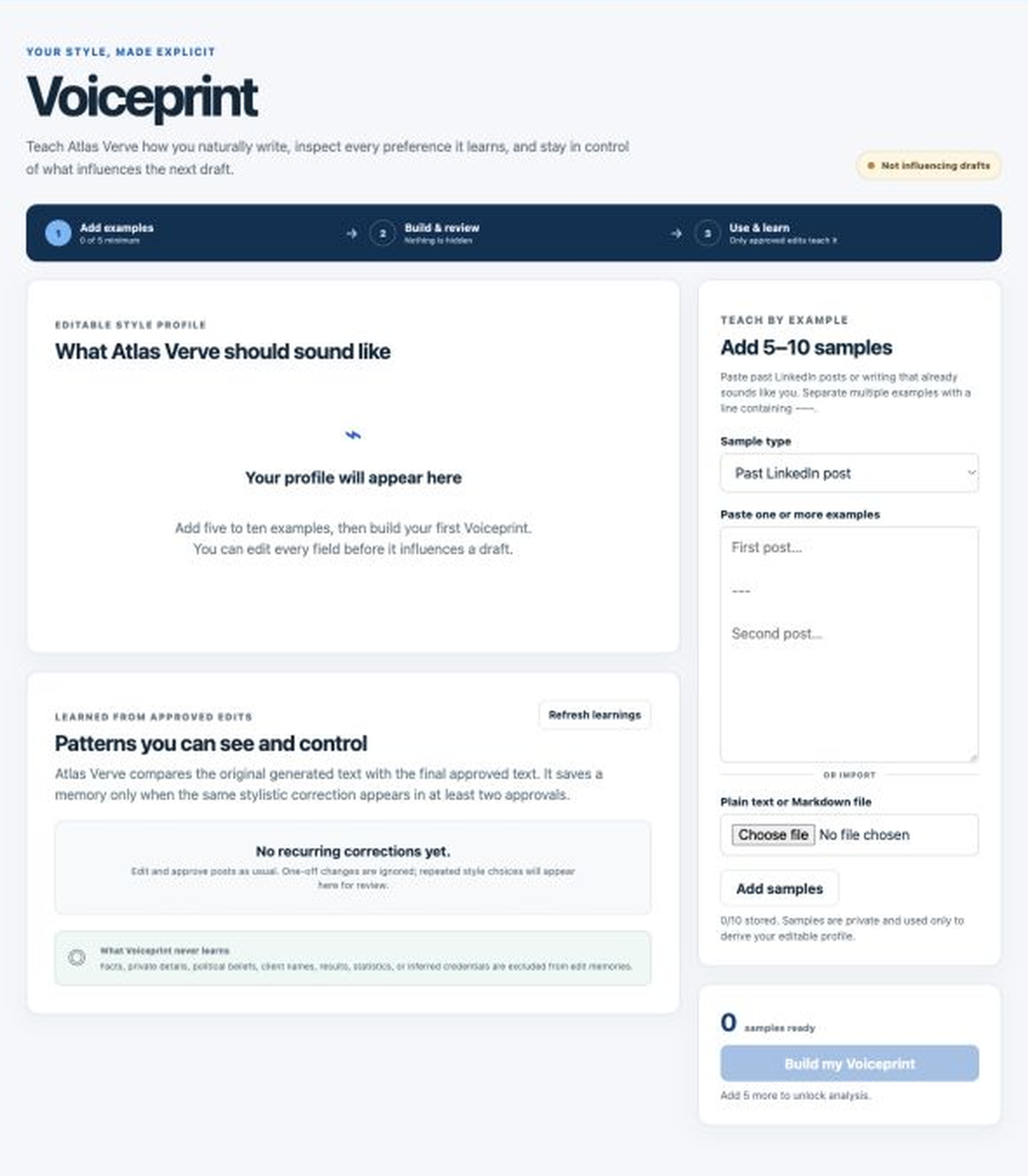
Notice sentence length, preferred openings, technical depth and phrases the author routinely removes. Those patterns matter more than a list of adjectives.
Treat the draft as editable
The first generated version is material for judgment. It should make revision easier, not disguise uncertainty behind confident prose.
The workflow
A practical workflow for recognizable AI-assisted writing
Each stage answers a different question before the post reaches LinkedIn.
-
01
Name the reader and useful outcome
Decide who should care and what they should understand, question or try after reading.
-
02
Capture the author’s position
Record what happened, what most people miss and what the author recommends. Short, direct notes are enough.
-
03
Choose an angle
Compare a lesson, teaching framework or contrarian view before generating the complete draft.
-
04
Draft inside clear constraints
Use the chosen angle, source notes, desired length and known voice preferences to create one coherent version.
-
05
Edit for recognition
Remove claims the author cannot support, replace generic transitions and read the opening aloud. Approve only when it sounds defensible and familiar.
Worked example
Turn a vague AI opening into a specific point of view
Illustrative writing example: the source note says a product leader paused an automated customer reply because nobody had been named to handle exceptions.
Generic draft
AI is transforming customer service. Leaders must embrace innovation while keeping humans in the loop.
Draft grounded in the source note
Before an assistant answers more customer requests, decide who takes over when a case falls outside the playbook. Speed is useful only when that handoff is clear.
The revision makes one defensible argument from the supplied observation. It does not invent a customer result, a statistic or the author's personal experience.
Put it to work
Give the draft a source note before you give it a prompt
Copy these five lines into a note for one post. Fill them with facts and language the author can stand behind; leave a field blank when the answer is not known.
- Reader
Who needs this lesson, and what question are they trying to answer?
- Observed moment
What decision, objection, mistake or trade-off did the author actually encounter?
- Point of view
What does the author think should happen, and why?
- Evidence boundary
Which details are verified, hypothetical, confidential or still unknown?
- Voice cue
Include a sentence the author would say, plus one phrase or style they would avoid.
01
Warning signs of generic output
Broad claims, dramatic hooks, identical paragraph rhythms, unexplained certainty and conclusions that could belong to any company usually indicate missing source perspective.
02
Voice is visible behavior
A useful voice profile records observable patterns and remains editable. It should never invent biography, credentials or opinions.
03
Specificity does not require disclosure
An author can describe the shape of a decision or lesson without naming a client, colleague or confidential project.
Common questions
Clear answers before you begin.
Can AI learn my LinkedIn writing style?
It can identify recurring patterns from examples and edits, but those patterns should remain visible and correctable by you.
Should AI write the entire LinkedIn post in one step?
It can, but separating perspective, angle and drafting usually produces a more distinctive and reviewable result.
How do I know whether a post still sounds like me?
Check whether you would defend the opening, examples, claims and recommendation in a real conversation. If not, revise before publishing.
How do I stop AI posts from sounding like AI?
Start with a real observation in your own words. Remove stock openings and claims you cannot support, read the draft aloud, and edit until the example and recommendation sound like something you would say.