
Executive LinkedIn workflow
Turn limited executive time into a steady stream of credible LinkedIn content.
Executives rarely lack useful ideas. The bottleneck is converting decisions, meetings and operating lessons into publishable material without creating another full-time administrative task or handing away authorship.

Overview
Separate expert contribution from content administration
The executive should supply the judgment only they possess and make the final decision. Atlas Verve can organize topics, collect context, prepare drafts and track delivery for an individual LinkedIn profile. A communications partner may help outside the product, but Atlas Verve does not offer shared team drafting or delegated approval.
For the final pass, use the 10-check AI LinkedIn post review checklist before the executive approves a draft.
Capture ideas close to the work
Collect a lesson when the decision is fresh instead of relying on a blank content meeting weeks later.
Batch the repeatable work
Maintain a topic queue, schedule and review rhythm so administration does not compete with strategic work every day.
Keep accountability explicit
A named reviewer reads the complete post and makes a deliberate approval decision before publication.
The workflow
LinkedIn content creation for executives: a weekly rhythm
The cadence can be weekly even when idea capture happens continuously.
-
01
Define three to five content pillars
Choose themes where the executive has repeated experience and the intended audience has recurring questions.
-
02
Maintain a qualified idea queue
Record each topic with its audience, timely context and the point that makes it worth publishing.
-
03
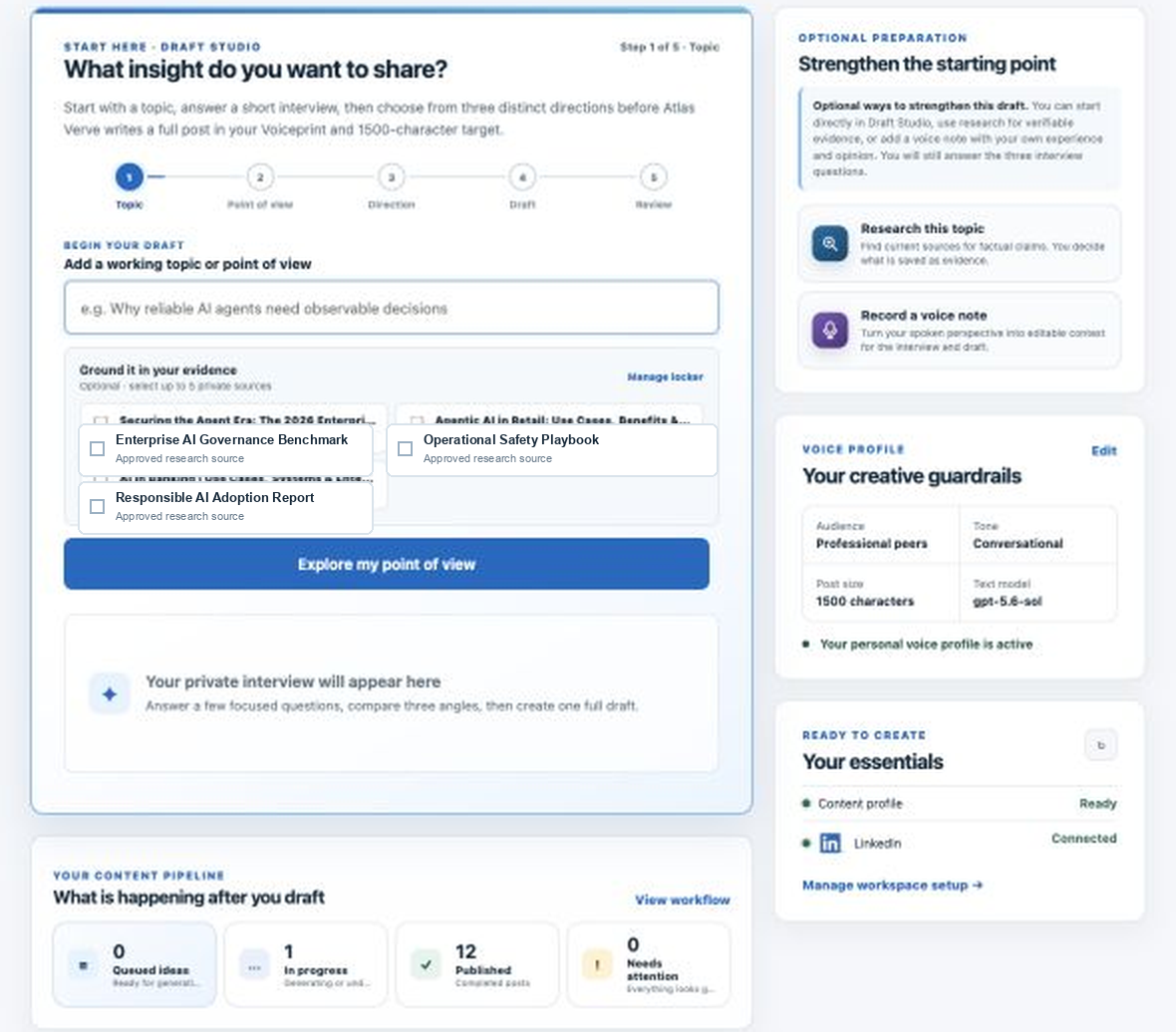
Run a short perspective interview
Use focused questions to surface the observation, misconception and recommendation behind one idea.
-
04
Prepare and review the draft
Create the draft in the executive’s preferred style, check claims and show the complete text and image together.
-
05
Approve, schedule and learn
Publish only the confirmed version, track delivery and feed meaningful edits back into future drafts.
Worked example
What a ten-minute input can produce
Illustrative planning example: an executive has one observation from a product review, but no time to write a finished post.
Three notes from the executive
Audience: operations leaders. Observation: the rollout plan covered the happy path but not exceptions. Recommendation: assign an escalation owner before expanding the pilot.
A draft angle to review
The question I would ask before widening an AI pilot: who owns the case the workflow cannot safely finish?
A communications partner can shape those notes into a post outside Atlas Verve. The executive still checks the interpretation and approves the final wording in their own workspace.
Put it to work
A ten-minute perspective capture
Use one real decision as the starting point. The interviewer records notes; the executive supplies judgment and later reviews the finished post. Ten minutes is a suggested agenda, not a publication deadline.
- 2 minChoose the decision
What happened, who is the intended reader and why would they care now?
- 3 minFind the tension
What trade-off, exception or misconception made this more than a routine update?
- 3 minState the recommendation
What should the reader consider doing differently? What would you defend in a meeting?
- 2 minSet the boundaries
Which facts may be named, what must stay private and what needs verification?
01
A calendar is not a strategy
Dates organize production, but pillars, audiences and business objectives determine whether the portfolio remains useful.
02
Delegation needs a boundary
A communications partner or ghostwriter can prepare copy from the executive's real notes outside Atlas Verve. The executive retains authority over personal experience, sensitive claims and final publication; Atlas Verve's current workspace does not provide team coauthoring or delegated approval.
03
Measure the system as well as the posts
Track idea readiness, review time, approval bottlenecks and publishing reliability alongside impressions and engagement.
Common questions
Clear answers before you begin.
How much time should an executive spend on each post?
The exact time varies, but a focused input and approval process should concentrate executive effort on perspective and judgment rather than formatting or scheduling.
Can a communications team or ghostwriter prepare the draft?
Yes, as an editorial arrangement outside Atlas Verve. The executive should supply the source perspective, check the claims and approve the final wording. Atlas Verve currently supports individual review, not a shared team approval workflow.
How often should executives publish on LinkedIn?
Choose a sustainable rhythm supported by enough real ideas. Consistency is more useful than a temporary burst of generic posts.